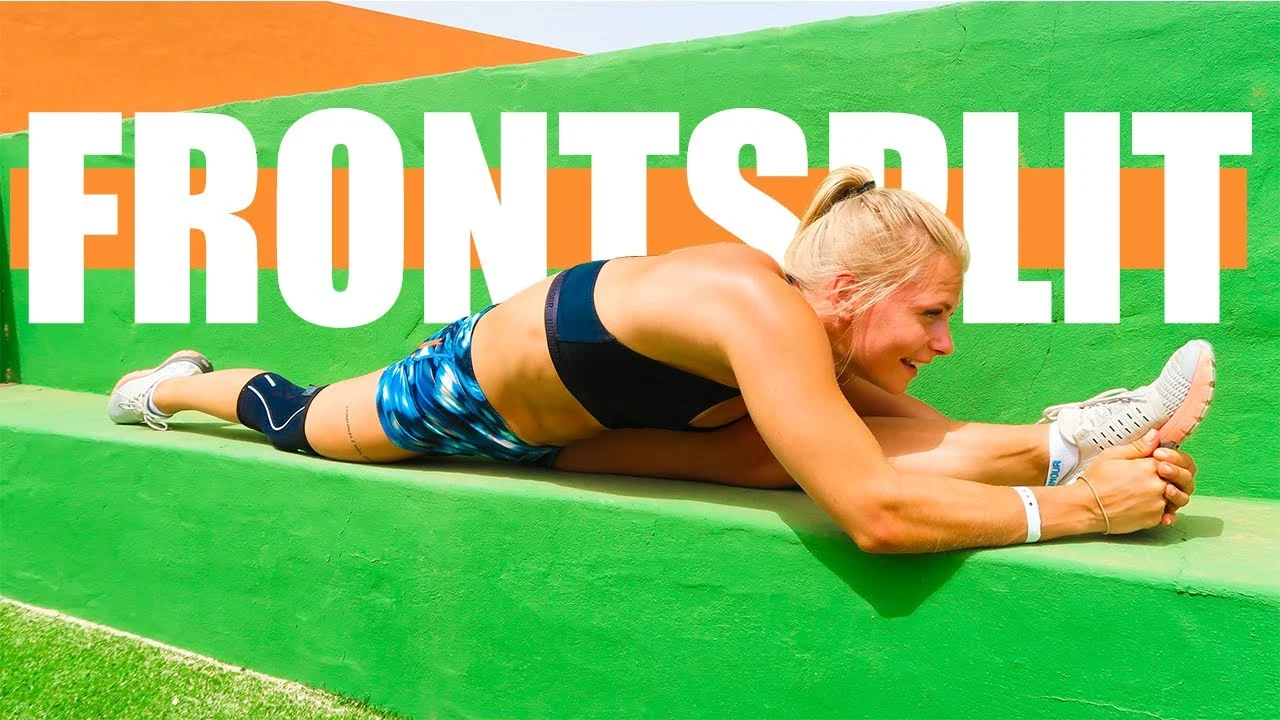
Getting your front splits is one of the most satisfying flexibility goals you can achieve. Whether you're into calisthenics, dance, martial arts, or just want to move better, these five exercises will get you there. I've used this exact routine myself and with my clients, and it works if you stay consistent.
Why Work Toward the Front Split?
The front split isn't just a party trick. It builds real, functional flexibility in your hamstrings, hip flexors, and lower back. Better hip mobility means better movement in everything you do. Squats, kicks, handstands, and even walking feel different when your hips are open.
For calisthenics athletes, the front split also unlocks skills that require a wide range of motion. Think about press to handstand or straddle movements. Flexibility is the foundation.
If you want a complete approach to mobility, check out my Mobility Program at Strong by Malle. But these five exercises are a solid starting point.
Before You Start: Warm Up Properly
This is the most important step and the one people skip the most. Your leg muscles need to be warm before you stretch them deeply. Cold muscles don't stretch well. They tear.
Spend at least 5 to 10 minutes doing something that raises your heart rate. Running, cross training, jump rope, or even a few rounds of squats and lunges will do the job. You want to feel warm and slightly sweaty before you touch any of these stretches.
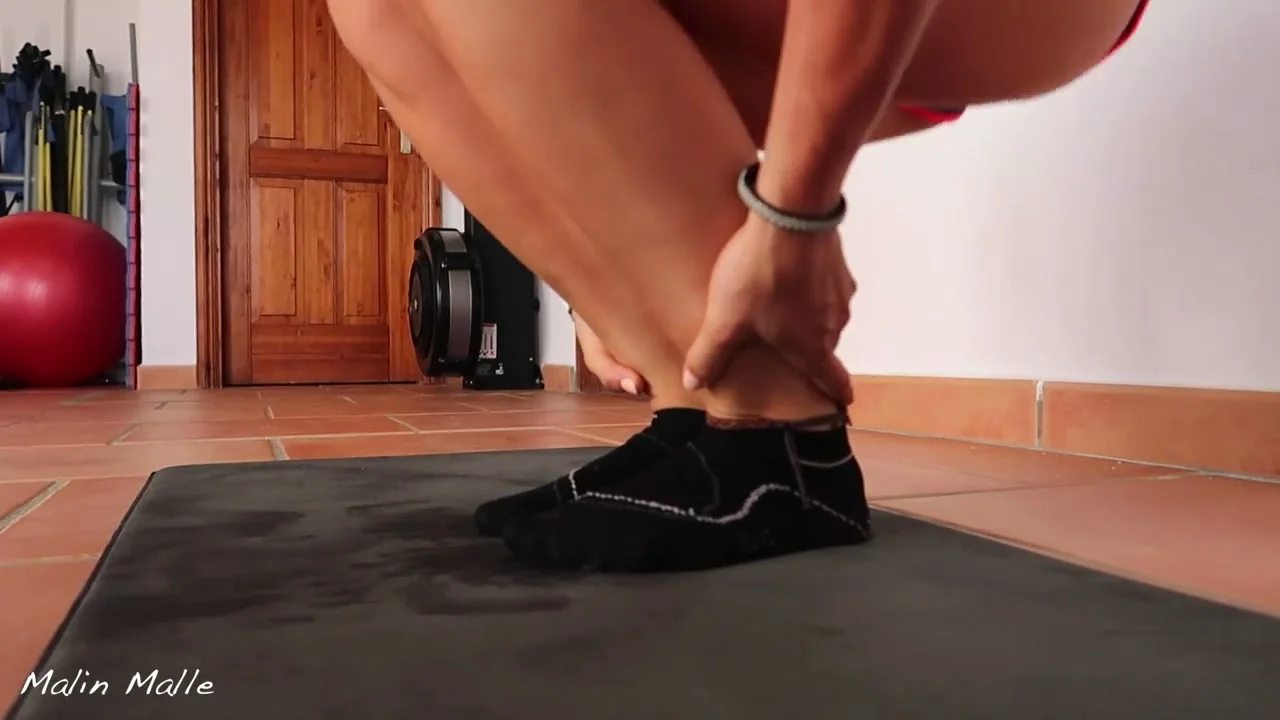
Exercise 1: Dynamic Hamstring Stretch
This is like an extension of your warmup. It targets the back of your legs, your hamstrings.
Start with your feet together. Come down with bent legs and reach for the floor with your hands. Then slowly extend your legs while keeping your hands as far down toward the floor as possible. It doesn't matter if you reach your toes or just your ankles. What matters is the technique.
When you extend your legs from the bottom, lock them out completely. No bent knees. And here's a key detail: keep your lower back arched. That means pushing your chest slightly forward. This shifts the stretch into the hamstrings where you actually want it. If you round your back, you lose the hamstring stretch and just hang from your spine.
Do this for about 10 to 15 slow reps. Controlled movement, no bouncing.
Exercise 2: Hip Flexor Stretch (Kneeling Lunge)
Now we shift the focus to the hip and groin. Tight hip flexors are one of the biggest obstacles to getting your splits.
Start with one knee on the floor and the other foot in front of you. Keep hip width between the knee and the front foot. Your back should be straight the entire time, and the front knee should stay at a 90 degree angle.
Don't lean forward. Stay upright and let your hips sink down. You should feel this deep in the front of the hip on the kneeling leg. Hold for 30 to 60 seconds per side.
Once this feels comfortable, you're ready for the next progression.
Exercise 3: Wall Hip Flexor Stretch (With Quad Stretch)
This is the harder version of exercise two. Same setup, but now your back leg goes up against the wall.
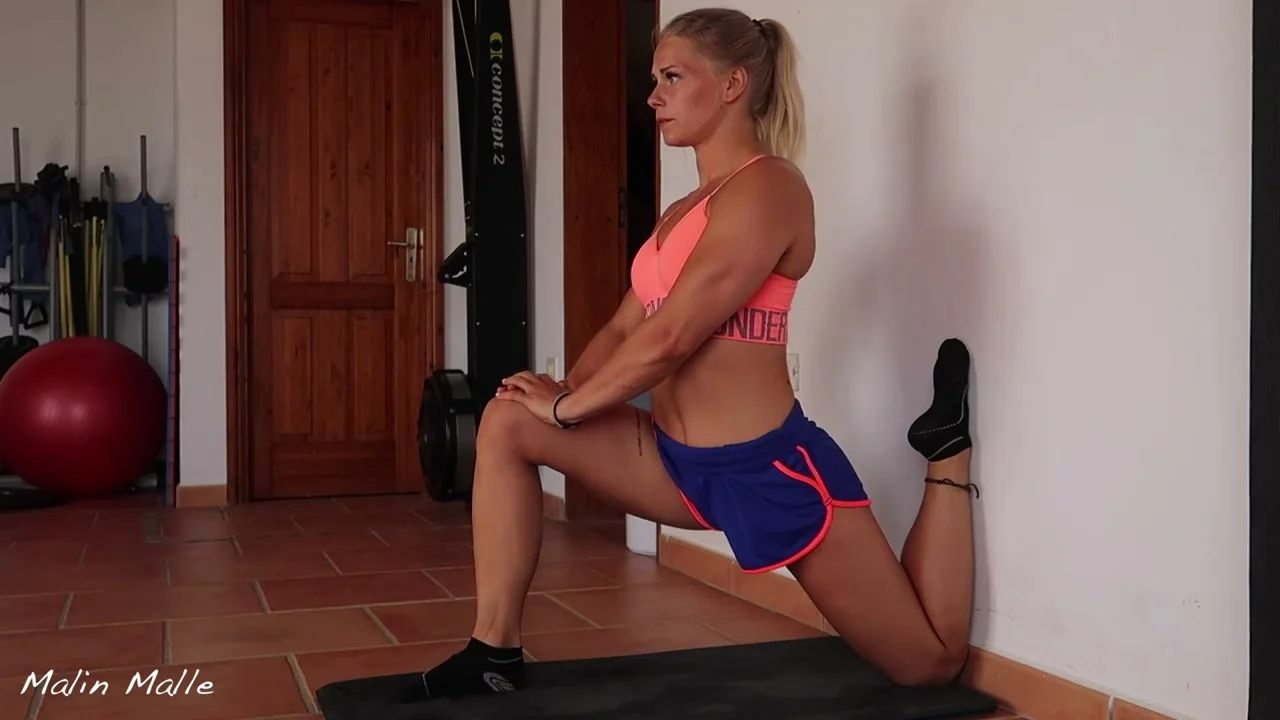
Put your back knee down right against the wall with your shin going up the wall behind you. Then bring your front foot forward into the lunge position. Same rules apply: hip width, straight back, 90 degrees in the front knee.
This version adds a quad stretch on top of the hip flexor stretch. It's intense. Put a mat or something soft under your back knee for comfort. You'll need it.
Hold for 30 to 60 seconds per side. Breathe through it.
Exercise 4: Jefferson's Curl (Static Hold)
The Jefferson's curl gives you a deep stretch in both the lower back and the hamstrings. You'll need a kettlebell and something to stand on, like a box or a step.
Grab a kettlebell with a weight you feel comfortable with. Stand on the edge of the box so the kettlebell can travel below your feet. With your legs straight and knees locked out, slowly lower the kettlebell as far down as you can.
Here's the key: push your butt up and back. This prevents your back from rounding too much and directs the stretch into the hamstrings. You can perform this as a static hold at the bottom, or do slow dynamic reps.
Start light. Really light. This exercise is powerful and you don't need much weight to feel it. Hold the bottom position for 20 to 30 seconds, or do 5 to 8 slow reps.
Exercise 5: Assisted Front Split on Height
This is the final exercise before the full front split. You're essentially doing the split, but with support.
Grab two kettlebells or yoga blocks and place them on each side of you. Hold onto them as you lower into your front split. The support lets you control how deep you go without dumping all your weight into the stretch.

Keep these points in mind:
- Hip width between your legs
- Back stays straight and tall
- Hips should point as far forward as possible
- Front toes are pointed
- Back knee faces straight down to the floor
Hold for 30 to 60 seconds per side. Over time, lower yourself deeper until you don't need the support anymore.
Common Mistakes to Avoid
Skipping the warmup. I can't stress this enough. Stretching cold muscles is how injuries happen. Always warm up first.
Bouncing in stretches. Ballistic stretching has its place, but when you're working toward splits, controlled and sustained holds are safer and more effective.
Letting the hips rotate. In the split, your hips should face forward as much as possible. When the hip of the back leg opens to the side, you're cheating the stretch.
Rounding the back during hamstring stretches. Keep that lower back arched. The stretch belongs in the hamstrings, not your spine.
Going too deep too fast. Flexibility takes time. Forcing yourself into a position you're not ready for will set you back, not push you forward.
How Often Should You Practice?
I recommend doing this routine 3 to 5 times per week. Consistency beats intensity when it comes to flexibility. A 15 to 20 minute session done regularly will get you results faster than one long session once a week.
Every body is different. Some people get their splits in a few weeks. For others, it takes months. That's normal. Don't compare your progress to anyone else's timeline.
If you want a structured program that covers full body mobility, not just splits, take a look at my Mobility System. I built it to help you get flexible in a way that actually supports your training.
FAQ
How long does it take to get front splits?
It depends on your starting flexibility and how consistently you practice. Some people see big progress in 4 to 6 weeks. Others need 3 to 6 months. Stay patient and train regularly.
Can I do these exercises every day?
You can, but listen to your body. If you're very sore, take a rest day. 3 to 5 times per week is a good frequency for most people.
What if I can't reach the floor in the hamstring stretch?
That's completely fine. Go as far as you can with good form. The range will increase over time. Never force it.
Do I need to do both sides for the split?
Yes. Always stretch both sides evenly, even if one side is more flexible. This helps prevent imbalances and keeps your hips healthy.
Is the front split useful for calisthenics?
Absolutely. Better hip flexibility helps with many calisthenics skills and improves your overall movement quality. It also reduces injury risk.
Should I stretch before or after my workout?
Dynamic stretching is great before a workout. Deep static stretching like this routine is best done after your workout or as a separate session when your muscles are warm.
I hope this helps you on your splits journey. Stay consistent, be patient with yourself, and enjoy the process. You've got this.